
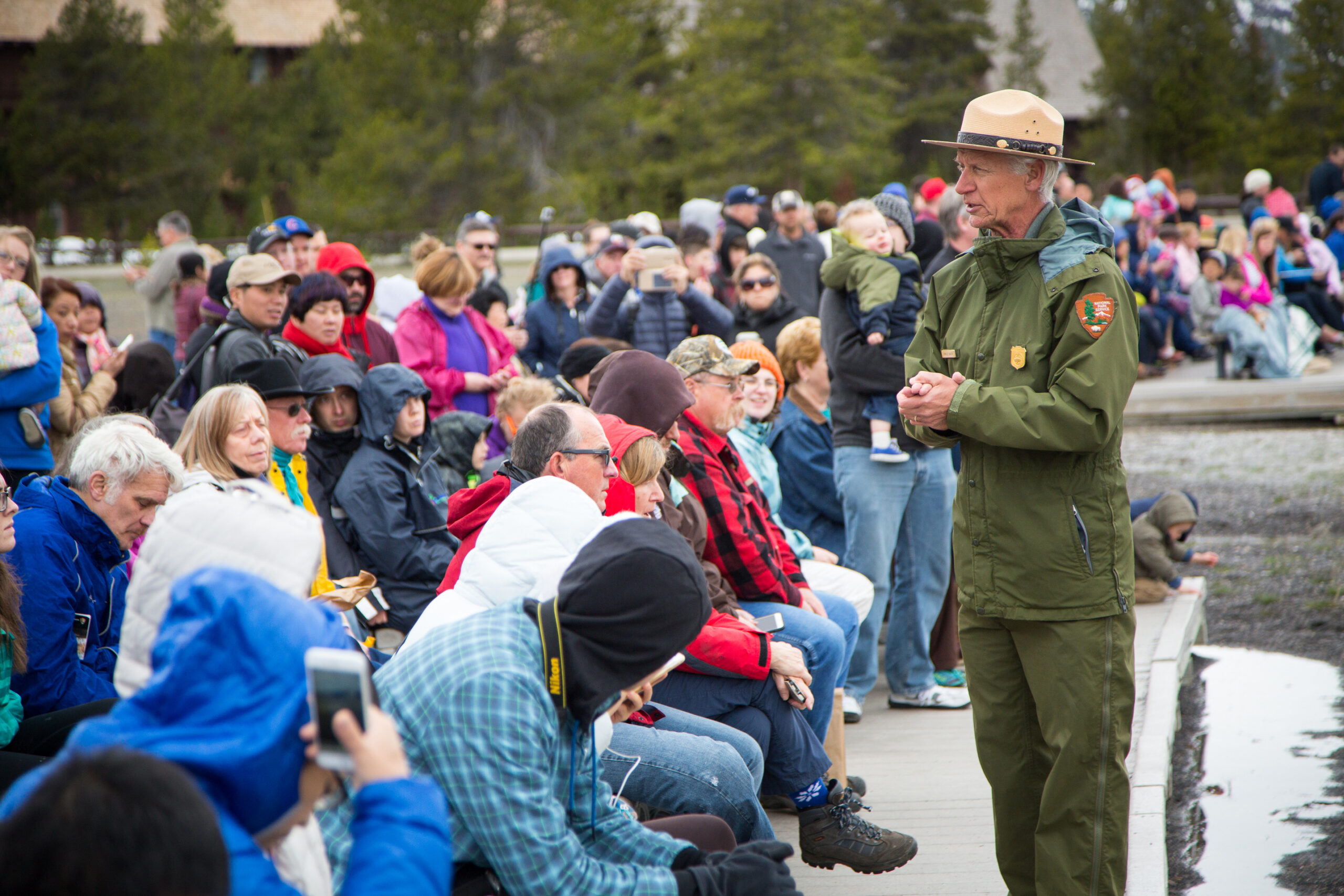
Last July 4th, I awoke much earlier than planned feeling very unsettled. Deep in writing The National Parks Inspiration Guide and marking an ultra-patriotic day, the endangered health of national parks weighed on me. The summer of 2024 had lots of news about budget cuts for the National Park Service, NPS mass retirements, and the infamous Department of Governmental Efficiency (DOGE) recklessly cutting programs without any understanding of the damage they wreaked. We were also learning about the culture war being waged in national parks as those in power aim to rewrite American history at the expense of marginalized communities.
My morning coffee began to do its work, and a couple hours later, pages 5 through 9 of The National Parks Inspiration Guide had been written. To celebrate what Ken Burns famously called "America's Best Idea" but also to encourage us to bring our passions with us to the polling place, here is that morning's passage from the introduction to The National Parks Inspiration Guide.
Our Endangered Parks
We have become great because of the lavish use of our resources. ... But the time has come to inquire seriously what will happen when our forests are gone, when the coal, the iron, the oil, and the gas are exhausted, when the soils have been still further impoverished and washed into the streams, polluting the rivers, denuding the fields and obstructing navigation. —Theodore Roosevelt
In 2026, as this book goes to press, America’s national parks face a multitude of threats. That you’re reading this book indicates you have a love for our parks—precisely the right audience to take seriously and care about the challenges we must address.
Climate change: The ongoing crisis affects everybody in a multitude of ways. Thanks to their wide support and familiarity, national parks are often used as case studies of how climate change is devastating the environment and ecosystem. Increasing global temperatures, while not always evident in wintery conditions, are well documented, and that affects the environment in many ways.
Precipitation patterns are changing, increasing in some places and decreasing in others. Drought, floods, rising sea levels, melting glaciers and permafrost all affect the ecosystem and the lands of national parks. Pushed to adapt to the new conditions, not all plant and animal species succeed, leading to endangered and extinct species. When those species’ former roles in the ecosystem are unfilled, opportunistic invasive species encroach, further threatening native life. Warmer ocean water endangers coral reefs, and low-lying areas are more vulnerable to sea surges and coastal erosion. While fire is a key ingredient in many ecosystems, extremely dry conditions lead to devastating wildfires that harm the parks for decades. Severe weather is growing increasingly common and extreme.
Overuse: It’s often said we’re loving our parks to death. In 2025, the more than four hundred National Park Service units that track visitor use documented 323 million recreational individual visits, down 2.7 percent from a record-setting 2024 due in part to a 43-day government shutdown that closed many parks.
For national parks in particular, visitation numbers are astounding. Almost 93.9 million of those visits were to the 63 national parks in this book. The ten most-visited national parks—Great Smoky Mountain, Zion, Yellowstone, Grand Canyon, Yosemite, Rocky Mountain, Acadia, Grand Teton, Olympic, and Glacier—logged more than 52 percent of those visits in total. The top 25 parks logged a whopping 84 percent of those visits. (The other 38 parks account for only about 16 percent of those visits.)
When you put that many people on two-lane roads, narrow paths and boardwalks, acrophobia-inducing observation platforms, and at lunch-hour concession stands, challenges are bound to occur. What most of us notice first is the crowding: vehicular traffic distracting us from the beauty and slowing our pace to a crawl, finding a parking space, and accepting we’re not going to get a person-free photo unless we’re willing to wait a while. That can chafe on all of us. Nobody goes to a national park to have a miserable time!
Beyond that, air pollution from cars in the parks and factors outside the parks such as smog or wildfires are constant concerns. Pollution and objects, especially plastics, left behind by visitors disturb the view and cause problems for the wildlife.
National Park Service administrators are experimenting with ways to manage overcrowding. Ideas like intrapark shuttles, limiting the number of vehicles on park roads, using timed entry schedules, requiring advance reservations, and spreading out the visitor load are proving effective, but there’s still much to do.
Land use: Federally owned lands are themselves a source of controversy, especially in the West. Several federal agencies own vast swaths of land, and what to do with that land is an ongoing political contest. Federally owned land targeted by loggers, miners, energy producers, agriculture, and commercial development often borders national parks. Even when the land is used wisely with conservation in mind, the environment within the parks can be affected. The most extreme idea that politicians have floated is to privatize the national parks themselves—ironic, given that the national park system was created in part to prevent that very scenario and keep public lands in public hands.
Under-resourcing: While national parks generate significant income, the system as a whole is still underfunded—and recent governmental action is aggravating that problem. The NPS’s 2025 budget totaled $3.3 billion, but cutting $1 billion from that budget is on the table. Park maintenance is years behind schedule and has been for a long time. The NPS estimates that there was a backlog of almost $23 billion in deferred maintenance at the end of the 2024 fiscal year. Roadwork and safety improvements are a constant need, as is updating infrastructure to comply with the Americans with Disabilities Act. Despite record attendance levels in national parks, in 2025 President Donald Trump’s administration fired or persuaded more than 12 percent of the NPS workforce to accept voluntary severance or retirement offers as a cost-cutting measure. Though the National Park Foundation, the National Parks Conservation Association, and several park-specific nonprofits support the parks, they can’t fully address the needs of a significantly stressed National Park Service.
Culture wars: Finally, the parks face an ideological threat from the ongoing cultural battle over America’s self-understanding and identity. In 2025, as part of a sweeping partisan effort to boost American nationalism, the Trump Administration directed NPS units to invite visitors to report information that portrayed America negatively. This was generally interpreted as an invitation to flag racist, homophobic, or other discriminatory elements that, as tragic and embarrassing as they may be, remain an undeniable part of American history. How that effort will play out is still unclear as this book goes to press.
-#-